

Our work in Burkina Faso focuses on promoting smallholder farming, improving food security and promoting sustainable alternatives to meet the needs of the rural population. Humundi (formerly SOS Faim) is an organisation that has been supporting farming communities in Burkina Faso, alongside farmers’ organisations, local NGOs and rural finance institutions, for over 40 years.
Our work in
The context in Burkina Faso
In Burkina Faso, agriculture employs around 80 per cent of the working population but generates only 20.3 per cent of GDP (2024, Directorate-General of the Treasury), illustrating the sector’s poor performance and its impact on rural poverty. This imbalance highlights the sector’s poor performance and its direct impact on rural poverty.
The north of the country, characterised by an arid Sahelian climate, relies mainly on extensive livestock farming and short-cycle food crops. Yields there vary greatly due to irregular rainfall. During the dry season, many farmers lose their agricultural income and are forced to migrate temporarily to towns or neighbouring countries to find work. In the more fertile south, farmers can diversify their crops and sell cash crops such as cotton or sesame. However, access to fair prices in the markets remains difficult for the vast majority.
Generally speaking, family farming lacks technical support, suitable infrastructure and accessible finance: the 2025 budget allocated to rural development represents only 5.6 per cent of the national budget, far short of the 10 per cent recommended by the Malabo Commitment (2003).
Compounding this structural situation is a major security crisis, which is further disrupting rural dynamics. Since 2015, attacks by non-state armed groups have caused the displacement of more than 2 million people across the country, including nearly 500,000 in the North-Central region. Families hosting internally displaced persons are facing severe strain on their resources, whilst the displaced people themselves struggle to find employment, access to land or essential services in already overcrowded agricultural areas. These displacements are exacerbating pressure on rural resources and food insecurity: the number of displaced people in Burkina Faso has risen from 87,000 in 2019 to 2.06 million in March 2023 (SP/CONASUR), and acute food insecurity now affects 2.7 million people (WFP, 2024).
Our work in Burkina Faso
Since the early 1980s, Humundi has been supporting rural communities in Burkina Faso through an agroecological and solidarity-based approach. Our aim is to strengthen food sovereignty and promote the economic self-reliance of farming families.
Strengthening agroecology
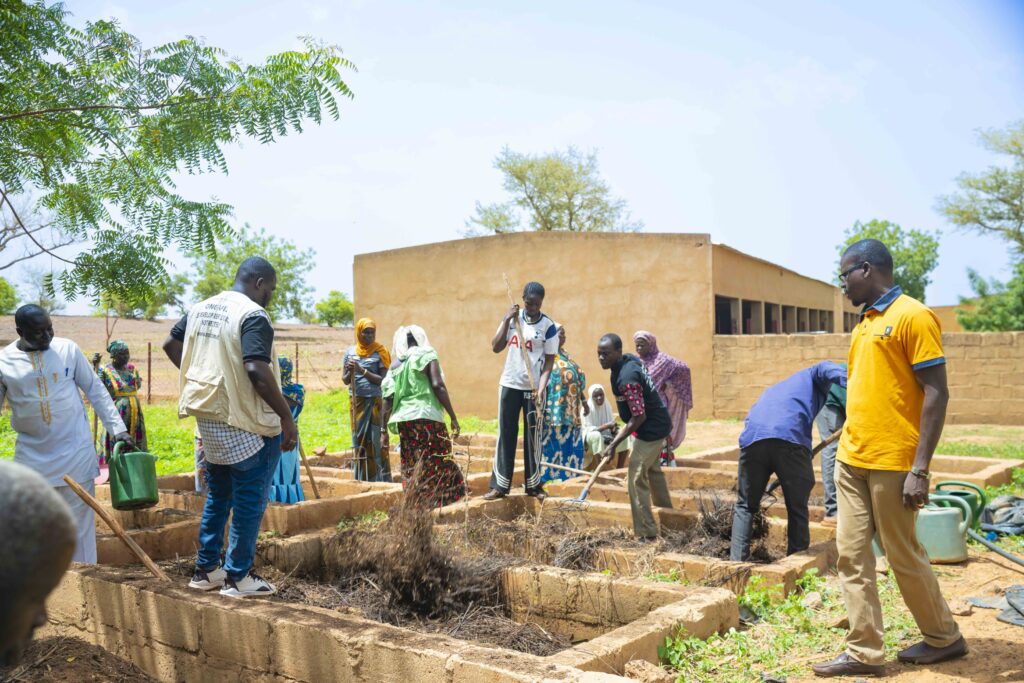
We support agroecological practices that preserve soil, water and biodiversity. Faced with repeated droughts, farmers are growing indigenous varieties such as cowpeas, which are better adapted to water scarcity, and using traditional techniques — half-moons, stone ridges and zaï — to retain water in the soil.
Strengthening food security
Since the 1980s, we have been supporting the network of food security granaries to guarantee food supplies during the dry season, when farming families run short of cereals. These reserves enabled crops to be stored at low cost and then resold at an affordable price. This model has enabled the sale of up to 5,000 tonnes of cereals per year, benefiting more than 115,000 people through 470 granaries.
Supporting the marketing of agricultural produce
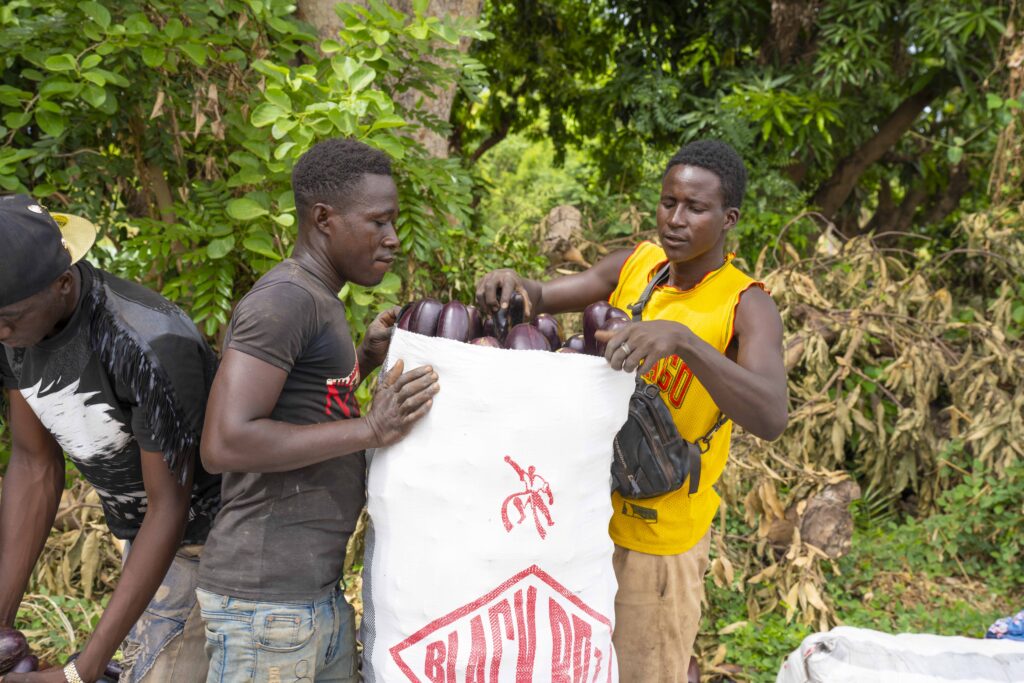
We are setting up collective marketing schemes to help producers secure better prices. In November 2025, we co-organised a regional workshop in Ouagadougou, bringing together 72 participants from seven West African countries, to facilitate family farms’ access to private markets.
Supporting displaced people
In response to the security crisis, we are training displaced people in Burkina Faso to restore degraded land for farming and are promoting income diversification through livestock farming — two essential means of rebuilding economic activity and regaining their independence. In 2023, our support benefited 4,000 people, half of whom were displaced persons.
Ensuring access to rural finance
We support rural finance institutions that offer loans tailored to the needs of small-scale farmers – who are often excluded from traditional banking services – to help them finance their agricultural activities sustainably.
These initiatives target vulnerable rural areas, in direct response to the needs expressed by the communities.
Agriculture that respects
the planet and those who cultivate it

Key figures

10
Partners

7
Farmers’ organisations

2
Local NGOs

185 895
Beneficiaries

> 1M €
Invested

1
Microfinance institution
Our partners in Burkina Faso
Humundi carries out projects alongside 10 local partners: farmers’ organisations, microfinance institutions and Burkinabe NGOs to promote sustainable and inclusive projects, grounded in local realities and the needs of the most vulnerable populations.
| Our partners in Burkina Faso | What we do together |
|---|---|
| AFDR (Association for Training and Rural Development) | Combating poverty and food insecurity in the Northern Region through vocational training, healthcare and agroecology. |
| APFD (Association for the Promotion of Women) | Promoting women’s role in agriculture. |
| APFI (Association for the Promotion of Inclusive Finance) | Providing financial services in rural areas through participatory governance. |
| APIL (Action for the Promotion of Local Initiatives) | To promote income-generating activities in rural areas and equal rights for men and women. |
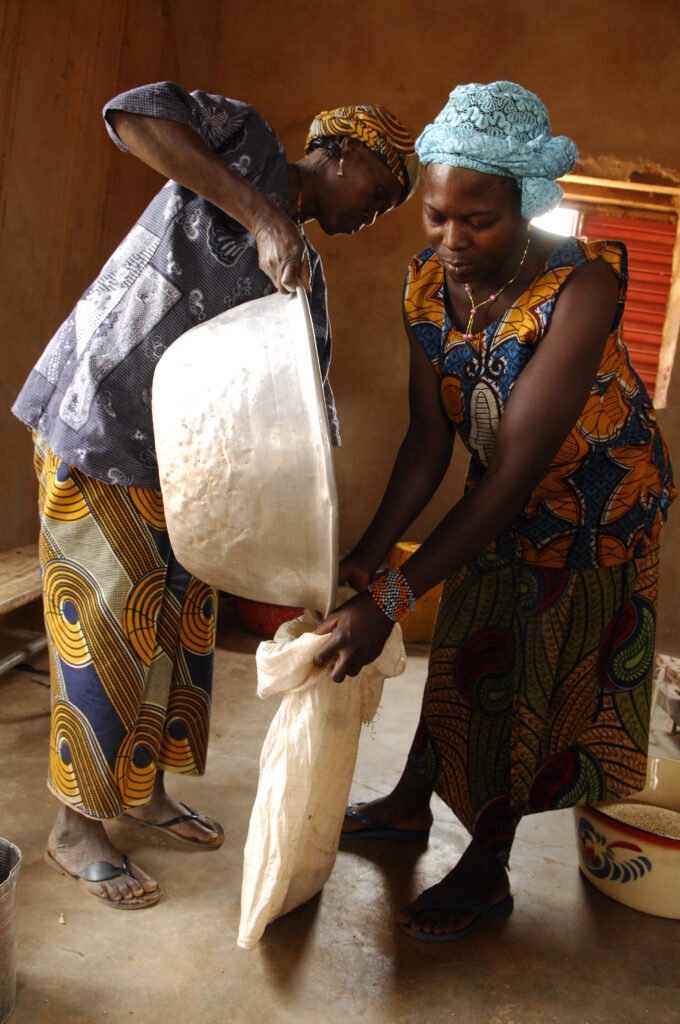
| AWFK (WendYam Association of Women of Kouritenga) | A network of women active in the processing and marketing of agricultural products. |
| CPF (Farmers’ Confederation of Burkina Faso) | Representing 15 farmers’ federations in dealings with the government to promote sustainable family farming. |
| Coopérative VIIM BAORÉ | Providing financial and technical support to a network of food security granaries. |
| FENOP (National Federation of Farmers’ Organisations of Burkina Faso) | Brings together 250 farmers’ organisations and carries out advocacy work. |
| ROPPA (Network of Farmers’ and Agricultural Producers’ Organisations of West Africa) | Advocates for family farming across 13 West African states. |
| USCCPA/BM (Union of Cooperative Societies for the Marketing of Agricultural Products) | To provide inputs, agricultural advice and promote the marketing of agroecological products. |



Your donations and support make a difference
Your donations and support are essential to underpinning the agroecological, economic and social transition in Burkina Faso. Thanks to your donations, Humundi can train farmers in sustainable agricultural practices, strengthen the network of food security granaries, improve access to seeds, water and agricultural tools, and support displaced people in growing their own food and becoming resilient despite the security crisis.
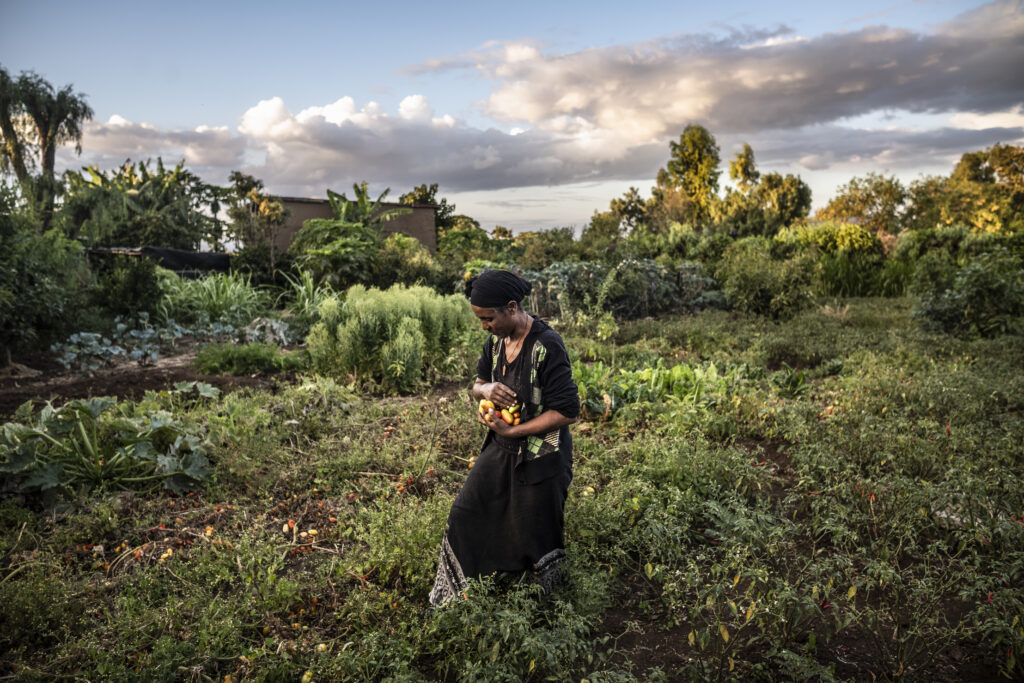

Your support funds loans tailored to each farming family, enabling them to develop their livelihoods sustainably. Every donation, whether a one-off or regular contribution, helps to strengthen food security in rural communities and build a fairer future for Burkinabe families. Every donation helps to ensure the long-term sustainability of our projects on the ground, which are tailored to the realities of rural communities.
Make a donation today for Burkina Faso provides concrete and lasting assistance to the rural communities most vulnerable to the climate and security crises.
FAQ – Donations and aid in Burkina Faso
Read more: Burkina FasoWhy does Humundi work in Burkina Faso?
Burkina Faso is a predominantly agricultural country, but one that is structurally vulnerable: the rural sector suffers from a lack of investment, limited access to finance and growing exposure to climate change, against a backdrop of a major security crisis. For over 40 years, Humundi has been working to support family farming, improve food security and create sustainable alternatives.
What are Humundi’s main initiatives in Burkina Faso?
Humundi supports agroecology, dry-season market gardening, collective marketing and access to credit tailored to rural families. We also train displaced people to restore degraded land and diversify their income through livestock farming.
How is my donation used in practice?
Your donation funds agricultural training, strengthens the network of food security granaries, improves access to seeds and tools, and supports displaced people in Burkina Faso in becoming more self-sufficient in food, by meeting the essential needs of the most vulnerable families.
Who does Humundi work with in Burkina Faso?
We collaborate with farmers’ organisations (such as the CPF, the FENOP and the USCCPA/BM), local NGOs (AFDR, APIL) and microfinance institutions (APFI, Coopérative VIIM BAORÉ) to implement projects tailored to the realities on the ground.
Can I get involved in ways other than making a donation?
Yes. You can take on a charity challenge, propose a corporate partnership, become a volunteer or local representative, or include Humundi in your will to ensure a lasting commitment.
In which other countries is Humundi active?
As well as Ethiopia, Humundi carries out projects in eight other countries across Europe, Africa and Latin America, promoting agriculture that feeds, regenerates and empowers rural communities.
- In Africa: Mali, Senegal, Ethiopia, Uganda, DRC
- In Latin America: Peru, Bolivia
- In Europe: Belgium
28 February 2025
The family farming Barometer 2021
For the past four years, the Family Farming Barometer has been looking at the issues that affect family farming and to which family farming is responding. It investigates the transition to sustainable food systems, which would ensure food security for everyone, now and in the future. For this 2021 edition, the Family Farming Barometer focuses…
28 February 2025
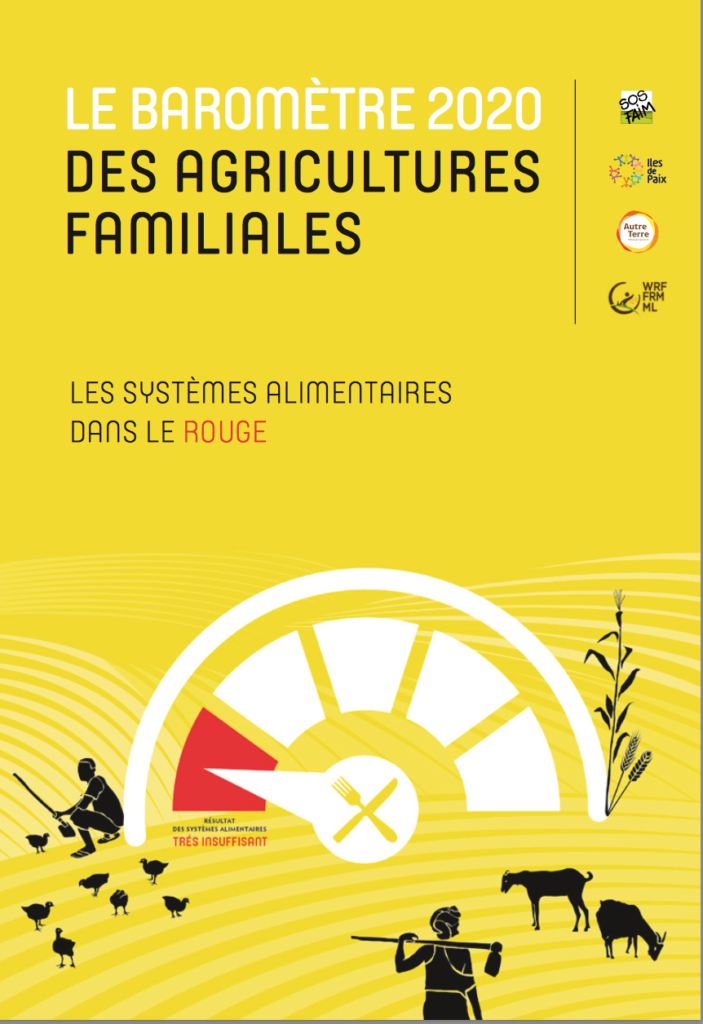
BAROMETER 2020
Understanding food systems to better transform them ! Agriculture? Malnutrition? Today, when we talk about these issues, it’s customary to talk about ‘food systems’. The fact that the United Nations will be holding a summit on food systems next year is proof of this. But what exactly do we mean by this notion? And above […]
28 February 2025
Barometer 2019
Family farming is one of the most widespread forms of agriculture in the world. Far from being a thing of the past, they are adapting and responding to changes in the environment. The Family Farm Barometer analyses the current issues that are shaping and transforming them. This publication assesses how global trends are benefiting or […]
Nos pays
D’action
Nous agissons dans neuf pays en Europe, Afrique et Amérique latin pour promouvoir des systèmes alimentaires durables. En étroite collaboration avec des partenaires locaux, nous apportons un appui adapté à chaque contexte pour générer un impact positif.
