

Our work in Senegal aims to strengthen agroecology to create a fair and sustainable future by supporting smallholder farming. Humundi (formerly SOS Faim) is an international NGO that has been helping Senegalese farming families achieve greater food self-sufficiency for 60 years.
Our work in

The context in Senegal
In West Africa, in Senegal, agriculture remains a major economic pillar: around 60 per cent of the working population is involved in food crop production, mainly on small family farms that receive very little support from the state. Nearly 40 per cent of the population lives in rural areas, where the poverty rate stands at 57.3 per cent — more than double that recorded in Dakar (IFAD, 2026).
The acceleration of climate change is having a direct impact on these rural populations. Population pressure, unsuitable agricultural practices (increasing use of pesticides, monoculture, poorly managed livestock farming) and the degradation of soil and biodiversity are exacerbating the risk of food insecurity.
The Fatick region, in western Senegal, suffers from chronic food insecurity and is unable to produce enough to ensure its food self-sufficiency. This low agricultural productivity has increased the country’s dependence on food imports; it now imports nearly 70 per cent of its food (IFAD, 2026).
Women are the hardest hit by poverty due to significant gender inequalities and the low literacy rate among adult women (41 per cent) compared to men (61 per cent). Despite favourable legislation (criminalisation of rape, gender parity in institutions, etc.), its implementation is often hampered by cultural constraints.
Our work in Senegal
For 60 years, Humundi (formerly SOS Faim) has been promoting family farming in Senegal. Our work is concentrated in particular in the regions of Fatick, Kaolack and Sine Saloum, as well as at national level.
Strengthening farmers’ organisations
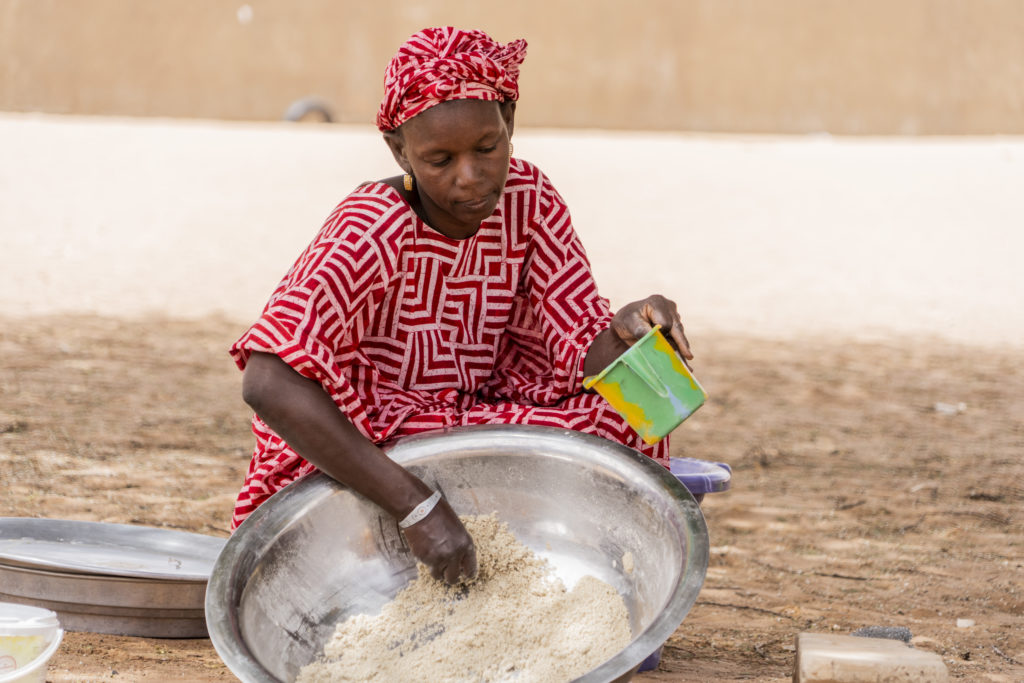
We support farmers’ organisations in strengthening their agroecological production techniques and scaling up these practices, as well as in their economic activities: seed supply, harvesting and processing of crops (fonio, cowpeas, rice), and access to finance. We therefore support women farmers in the cultivation and processing of cashew nuts, generating an average income of 225,000 CFA francs per year, as well as 74 groups of women livestock farmers who are helping to organise the goat sector.
Supporting local areas towards sustainable food systems
We raise awareness amongst and support local stakeholders (municipalities and departments) to jointly develop solutions tailored to the needs of communities. To tackle child malnutrition, we bring together local authorities, school canteens and women’s producer groups to provide healthy, locally sourced meals in school canteens. For instance, goat’s milk produced by women goat-herders in Fatick supplies 22 school canteens, enabling more than 4,600 pupils to receive one or two healthy meals a week.
Advocacy and raising public awareness
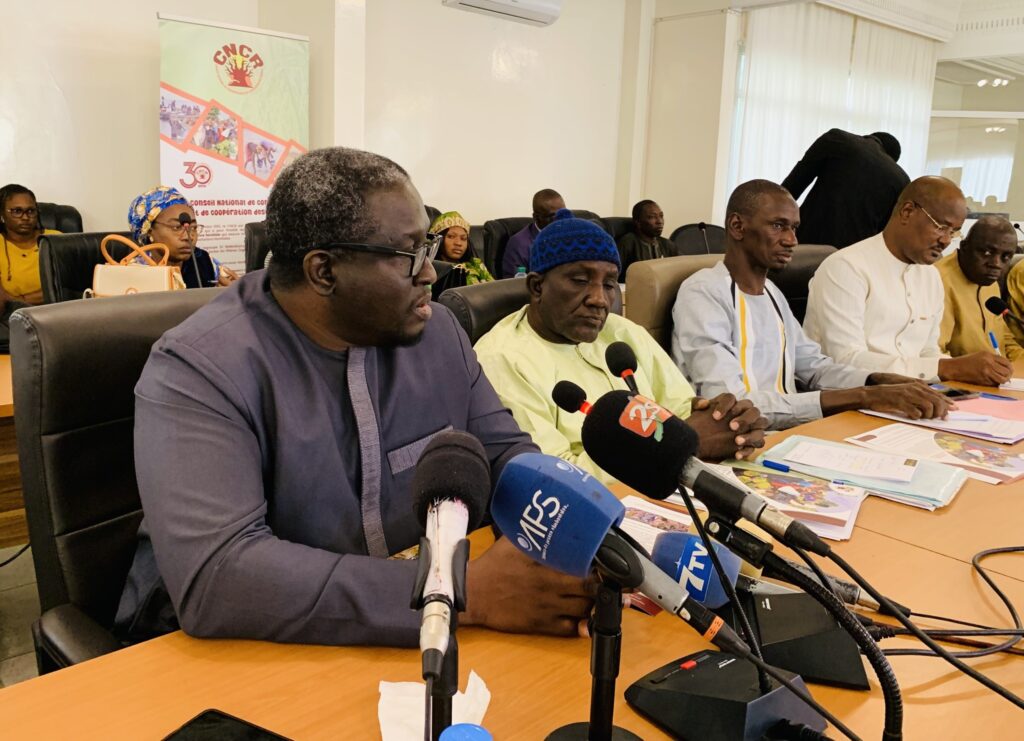
We carry out communication and awareness-raising activities aimed at the general public, through workshops and film screenings followed by discussions, and we are developing advocacy initiatives directed at the Senegalese authorities. Thanks to our partnership with the National Council for Consultation and Cooperation with Rural Communities (CNCR), a key player in the dialogue between the government and the farming community, in 2024, the national budget allocated to agriculture increased by 20 per cent, and the budget for organic fertilisers doubled.
Supporting rural women and young people
We support social initiatives that create development opportunities for young people and women: raising awareness of rights, training in women’s leadership and public speaking, drawing up gender action plans, and supporting initiatives led by rural youth.
School canteens serving
healthy and local food

Key figures

8
Partners
6
Farmers’ organisations

2
Local NGOs

147 416
Beneficiaries
679 K€
Invested
Our partners in Senegal
Humundi carries out its projects alongside 8 partners: NGOs, farmers’ organisations and a microfinance institution that strengthen the development of smallholder agriculture and the solidarity economy.
| Our partners in Senegal | What we do together |
|---|---|
| ANPDI (National Association for Integrated Development) | Supporting local stakeholders in the development of school canteens and the regional agroecological transition. |
| CICODEV (Pan-African Institute for Citizenship, Consumers and Development) | Raising awareness and advocating for local consumption and sustainable food systems. |
| CNCR (National Committee for Rural Consultation) | Leading the policy dialogue with the government on land tenure, agroecology and agricultural financing. |
| EGAB (Alliance of Associated Groups for Grassroots Development) | Reducing conflicts between farmers and herders through inclusive natural resource management and a network of veterinary assistants. |
| FAPAL (Federation of Farmers’ Associations of the Louga Region) | To market seeds and provide technical and economic support to family farms. |
| FONGS (Federation of NGOs in Senegal – Farmers’ Action) | To support the agroecological transition of family farms. |
| FYNW (Yaakar Nialni Wouly Federation) | Supporting rural communities in agroecology and the funding of local projects. |
| UJAK (Union of Young Farmers of Koyli Wirnde) | Supporting women in rice processing and agroecology in the north of the country. |


Your support and donations make a difference


Every day in Senegal, thousands of Senegalese farmers are committed to more sustainable agriculture, capable of feeding their families and communities, despite agricultural and social challenges. With your donations and support, they can go further: develop sustainable agroecological practices, strengthen their self-reliance and combat food insecurity.
Your donations and support fund training in agroecology, provide seeds suited to the country’s climate, and support the organisation and economic development of the region. Through your donations, you also help drive social change in favour of young people and women: raising community awareness of their rights, providing training in women’s leadership and public speaking, developing gender action plans within our partner organisations, and supporting initiatives led by rural youth.
Every donation, whether one-off or regular, helps guide women and young people towards viable solutions for their future. By making a donation, you are helping to build a more resilient, equitable and environmentally friendly agricultural sector.
Make a donation today for Senegal to provide practical and sustainable support to rural communities most vulnerable to the climate crisis and food insecurity.
FAQ – Donations and aid in Senegal
Read more: SenegalWhy does Humundi work in Senegal?
Senegal is a country where agriculture is a vital source of income for a large proportion of the population. However, smallholder farms face numerous challenges: climate change, loss of soil fertility, food insecurity and significant social inequalities, particularly affecting women. Humundi works to support sustainable smallholder farming and strengthen the self-reliance of rural communities.
What are Humundi’s main activities in Senegal?
Humundi works alongside Senegalese farming families to develop sustainable alternatives, by promoting agroecological practices, supporting local areas in moving towards sustainable food systems, advocating with the authorities, and backing social initiatives that benefit women and rural young people.
How is my donation used in practice?
Your donation funds training in agroecology and leadership for women, as well as initiatives led by rural youth; it provides seeds suited to the country’s climate; and it supports farmers’ organisations in their economic development.
Who does Humundi work with in Senegal?
We collaborate with 8 farmers’ organisations, 2 NGOs and 1 rural finance institution to implement projects tailored to local needs and realities.
In which other countries is the Humundi NGO active?
As well as Ethiopia, Humundi carries out projects in eight other countries across Europe, Africa and Latin America, promoting agriculture that feeds, regenerates and empowers rural communities.
- In Latin America: Peru, Bolivia
- In Africa: Burkina Faso, Ethiopia, Mali, Uganda, DRC
- In Europe: Belgium
28 February 2025
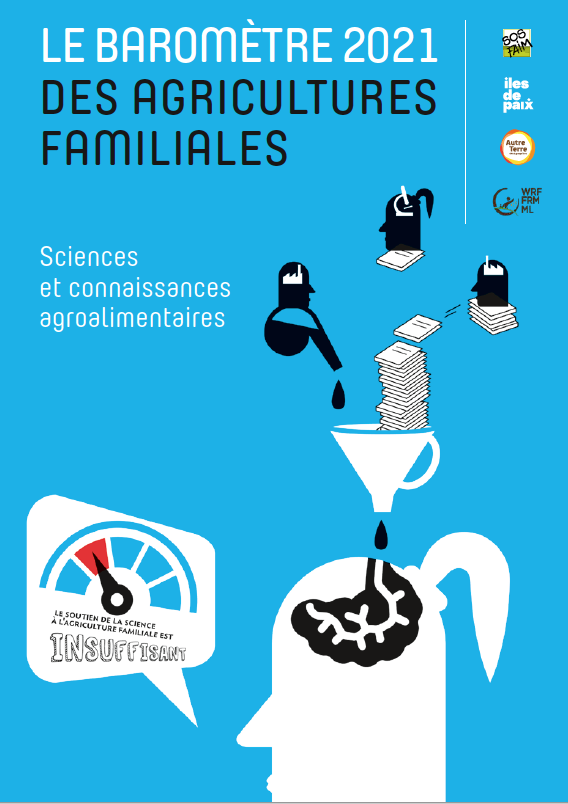
The family farming Barometer 2021
For the past four years, the Family Farming Barometer has been looking at the issues that affect family farming and to which family farming is responding. It investigates the transition to sustainable food systems, which would ensure food security for everyone, now and in the future. For this 2021 edition, the Family Farming Barometer focuses…
28 February 2025
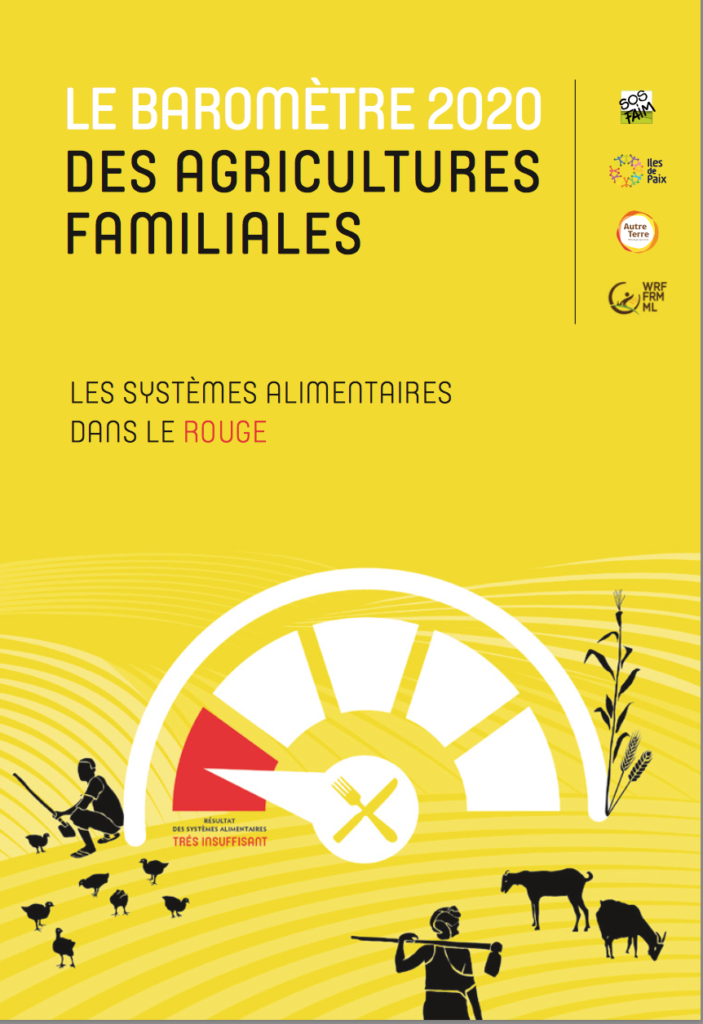
BAROMETER 2020
Understanding food systems to better transform them ! Agriculture? Malnutrition? Today, when we talk about these issues, it’s customary to talk about ‘food systems’. The fact that the United Nations will be holding a summit on food systems next year is proof of this. But what exactly do we mean by this notion? And above […]
28 February 2025
Barometer 2019
Family farming is one of the most widespread forms of agriculture in the world. Far from being a thing of the past, they are adapting and responding to changes in the environment. The Family Farm Barometer analyses the current issues that are shaping and transforming them. This publication assesses how global trends are benefiting or […]
Our countries
of action
We work in nine countries in Europe, Africa and Latin America to promote sustainable food systems. Working closely with local partners, we provide support tailored to each context to generate a positive impact.
