

Our work in Bolivia aims to promote sustainable agriculture, strengthen food security and improve the living conditions of rural communities. Humundi (formerly SOS Faim) is an international NGO that has been working alongside farmers, their families and Bolivian farmers’ organisations for over 40 years.
Our work in

The context in Bolivia
Despite strong economic growth in recent years, Bolivia remains one of the poorest countries in South America. According to ECLAC (the United Nations Economic Commission for Latin America and the Caribbean), nearly 48 per cent of Bolivia’s rural population lived in poverty, compared with 31.5 per cent in urban areas. This disparity affects indigenous peoples, women and children most of all. Bolivia’s economic model relies mainly on the extraction of natural resources, with significant environmental and social consequences. Whilst the state plays a central role in the economy, it invests little in family farming, hindering the development of a local and sustainable food system.
This dependence comes at a major environmental cost: according to the Ministry of Rural Development and Land, 51 per cent of the land is currently affected by erosion, compaction or salinisation, amounting to more than 56 million hectares. Deforestation is also accelerating: Bolivia ranks third in the world according to Global Forest Watch, with a 32 per cent increase in the rate of forest loss between 2021 and 2022. By the end of 2023, fires had ravaged more than 2 million hectares of forests and pastureland.
At the same time, rapid urbanisation – which has risen from 45 per cent in 1970 to 75 per cent today – has led to the emergence of deprived peri-urban areas, which face limited access to healthy food and agricultural land.
The major challenges remain a lack of investment in smallholder farming and the agroecological transition, a reliance on cash crops at the expense of food sovereignty, and marked inequalities between rural and urban populations.
Our work in Bolivia
Since the late 1980s, Humundi has been supporting farming families by implementing initiatives that strengthen the local economy, promote sustainable agricultural practices and ensure a healthy and accessible food supply. Our work focuses on the country’s most vulnerable areas: Sucre, the Caranavi region, the peri-urban area of Cochabamba, and the departments of La Paz, Oruro and Beni.
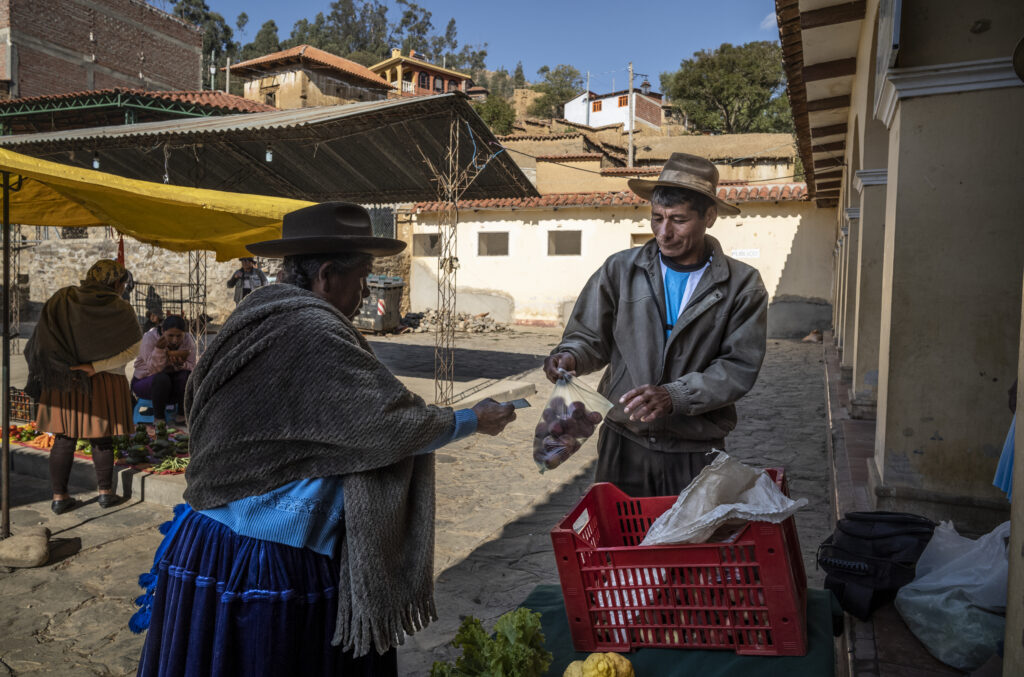
Supporting smallholder farming and the autonomy of rural communities
We support farmers’ organisations and work with them to develop sustainable agricultural practices and strengthen their supply chains. In 1984, Humundi began supporting the organic quinoa supply chain alongside ANAPQUI (the National Association of Quinoa Producers). By supporting it at every stage (marketing, organic production, processing), Humundi has contributed to its self-sufficiency: the organisation, comprising 2,500 producers, is now fully independent.
Facilitating access to rural finance
We support microfinance institutions that guarantee access to financial services tailored to small-scale farmers, enabling them to develop their agricultural activities. For 30 years, this support has facilitated access to finance for around thirty farmers’ organisations. This support is crucial for the empowerment of farming communities.
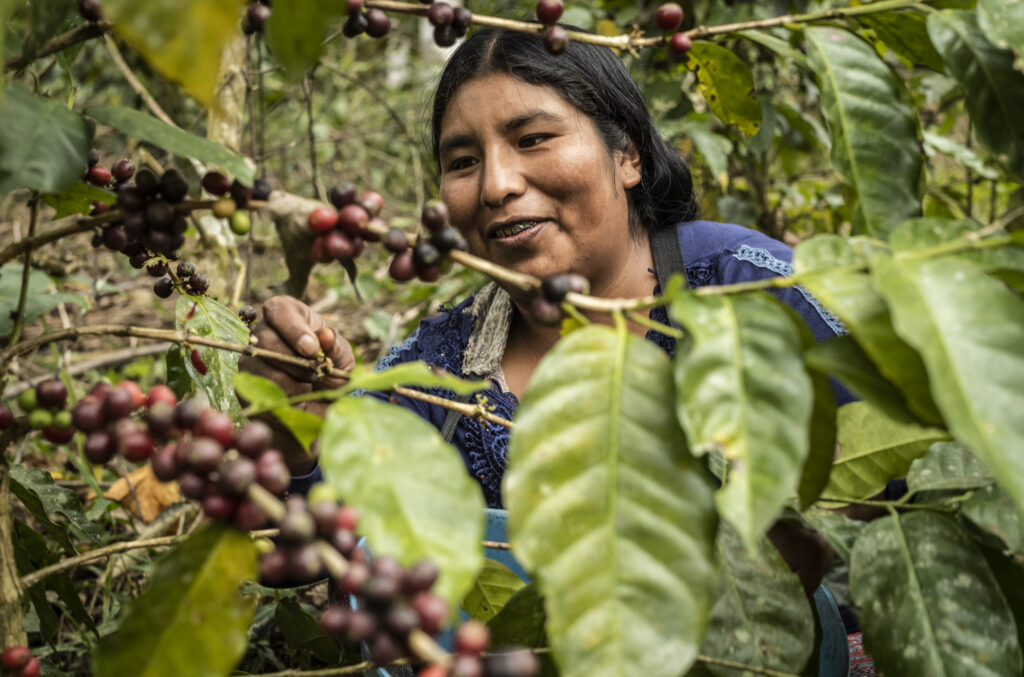
Promoting the agroecological transition
We promote environmentally friendly farming techniques to strengthen the resilience of family farms in the face of accelerating soil degradation and deforestation. Through FINCAFE, we are developing agroforestry systems that combine crops and trees on the same plot of land, thereby promoting biodiversity, conserving soil and diversifying the income derived from their farming activities: by the end of 2024, more than 244 farmers had been supported across 60 hectares of diversified coffee cultivation.
Supporting regional development and local value chains
We support food governance projects that foster dialogue between farmers, local authorities and other regional stakeholders, as well as the development of local value chains (crafts, small-scale processing, short supply chains) to ensure a decent income for farmers.
Strengthening national advocacy
We support several movements and platforms engaged in political advocacy, such as the Bolivian Agroecological Movement (MAB), which brings together more than 60 organisations. Several of our partners are active within this movement and helped to co-draft a roadmap for agroecology in 2024 and to develop the country’s national development strategy.
Working alongside farming families
for 40 years

Key figures

8
Partners

1
Farmers’ organisations

6
Local NGOs

17 705
Beneficiaries

531 K€
Invested

1
Microfinance institution
Our partners in Bolivia
Humundi runs projects alongside 10 partners: NGOs, farmers’ organisations and rural finance institutions, to help producers build their capacity, establish sustainable supply chains and ensure an inclusive future for farming families.
| Our partners in Bolivia | What we do together |
|---|---|
| AGRECOL (Agrecol Andes Foundation) | Supporting the agroecological transition through training and technical assistance, processing local produce and promoting short supply chains. |
| CIUDADANIA | Supporting producers in the peri-urban area of Cochabamba in agroecology and the care economy, and advocating for policies that promote family farming and gender equality. |
| FINCAFE | Providing financing, technical assistance and training in coffee agroforestry, prioritising the retention of young people in rural areas. |
| FINRURAL | Improving access to financial services for vulnerable populations and granting ‘green’ loans for agricultural innovation, prioritising young people and women, at national level. |
| FUNDAA.SUR (Fund for the Unity and Development of the Andes and the Amazon in the South) | To provide technical assistance and agroecological training to small-scale farmers, support organic certification and establish links between producers and consumers. |
| IPDRS (Institute for Rural Development in South America) | To support the processing and marketing of local organic products and political advocacy, whilst promoting the exchange of experiences between Peru and Bolivia. |
| PBCC (Bolivian Platform on Climate Change) | Raising awareness and training social organisations and local authorities on alternatives to the extractivist model, with a focus on climate justice and gender equality. |
| PRO-RURAL | Providing technical assistance and training in agroecology to small-scale farmers and promoting entrepreneurship among rural youth. |
| RED OEPAIC (Network of Economic Organisations and Artisan Producers with Cultural Identity) | To build the capacity of artisans (87 per cent of whom are women) in sustainable production, management and marketing, and to diversify their production towards food. |



Your donations and support make a difference
Every day in Bolivia, thousands of small-scale farmers are committed to more sustainable agriculture, capable of feeding their region despite soil degradation and the inequalities affecting rural areas. With your donations and support, they can go further: adopt agroecological practices, access suitable finance and earn a decent living from their farming activities, whilst feeding their communities.


Your donations and support in Bolivia fund training for farmers, the promotion of sustainable agroecological practices and the development of farmers’ organisations. Through your donations, you directly support our work on the ground, carried out alongside local partners, by improving access to suitable financial services and agricultural tools, and by supporting community-led advocacy platforms. Thanks to your support, Humundi is working towards a more inclusive economy, greater resilience to food crises and agriculture that respects the environment and local communities.
Every contribution, whether one-off or regular, helps to reduce poverty, promote sustainable development in rural areas and build a fairer future for Bolivian farming communities.
Make a donation today to Bolivia to provide practical and sustainable support to rural communities that are most vulnerable to the climate crisis and food insecurity.
FAQ – Donations and aid in Bolivia
Read more: BoliviaWhy does Humundi work in Bolivia?
Bolivia remains one of the poorest countries in South America, with a high concentration of poverty in rural areas. Smallholder farmers, women and children face a lack of support and access to resources. For over 20 years, Humundi has been working to strengthen family farming, improve food security and promote the agroecological transition.
What are Humundi’s main activities in Bolivia?
Humundi supports farmers’ organisations in structuring their supply chains, facilitates access to rural finance, promotes the agroecological transition, and supports policy advocacy, territorial development and local supply chains.
How is my donation used in practice?
Your donation funds training in agroecology, improved access to seeds and agricultural tools, the development of local supply chains and food governance initiatives.
Who does Humundi work with in Bolivia?
We collaborate with 10 partners (NGOs and farmers’ organisations) to implement projects tailored to local conditions.
Can I get involved in ways other than making a donation?
Yes! You can take on a charity challenge, propose a corporate partnership or join us as a volunteer to contribute your expertise on the ground. Every little helps when it comes to supporting farming communities in Bolivia.
In which other countries is Humundi active?
As well as Ethiopia, Humundi carries out projects in eight other countries across Europe, Africa and Latin America, promoting agriculture that feeds, regenerates and empowers rural communities.
- In Latin America: Peru
- In Africa: Burkina Faso, Ethiopia, Mali, Senegal, Uganda, DRC
- In Europe: Belgium
Our countries
of action
We work in nine countries in Europe, Africa and Latin America to promote sustainable food systems. Working closely with local partners, we provide support tailored to each context to generate a positive impact.
