
Our work in Peru consists of initiatives aimed at supporting the agroecological transition and improving food security for rural communities. Humundi (formerly SOS Faim) has been working alongside farmers’ organisations, NGOs and rural finance institutions to help rural communities escape poverty for over 25 years.
Our work
The context in Peru
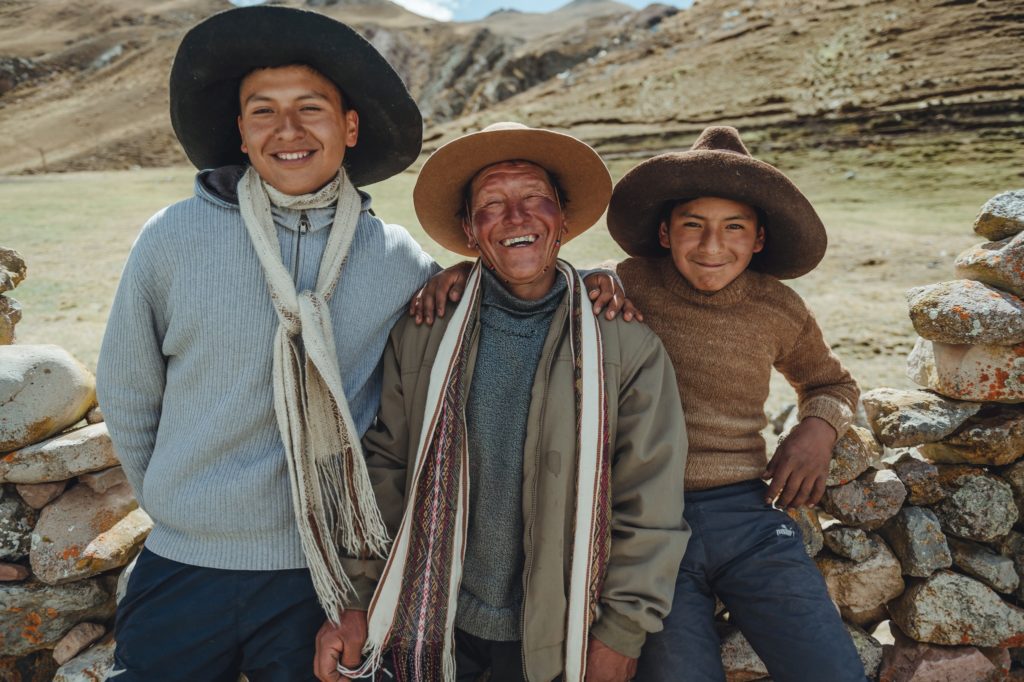
In the heart of the Peruvian Andes and the Peruvian Amazon, thousands of families rely on small-scale farming to make a living, living in precarious conditions. Despite significant economic growth, Peru continues to be characterised by high levels of rural inequality.
According to the INEI, 39.3 per cent of the rural population was living below the poverty line in 2024, compared with 24.8 per cent in urban areas. The rate of anaemia among children under three in rural areas stood at 51.9 per cent in 2024, compared with 40.2 per cent in urban areas (ENDES). The Covid-19 crisis, between 2020 and 2022, exacerbated these inequalities and undermined the livelihoods of farming families.
This vulnerability is compounded by a public health concern: according to a survey carried out in 2023 by the Peruvian Agroecological Consortium, a partner of Humundi, 46 per cent of fruit and vegetable samples taken from Peruvian markets exceeded national limits for pesticide residues.
In this context, rural women and indigenous communities are particularly vulnerable, often excluded from economic networks, credit, training and decision-making bodies, even though they play a central role in agriculture and food production.
Our work in Peru
Since the late 1990s, Humundi has been supporting farming families and helping to strengthen their economic and food security. Our work is concentrated in the country’s most vulnerable areas: the southern Andean region (Apurímac, Arequipa, Cusco, Puno) and the central and eastern Amazon region (Ucayali, Junín).
Structuring agricultural supply chains
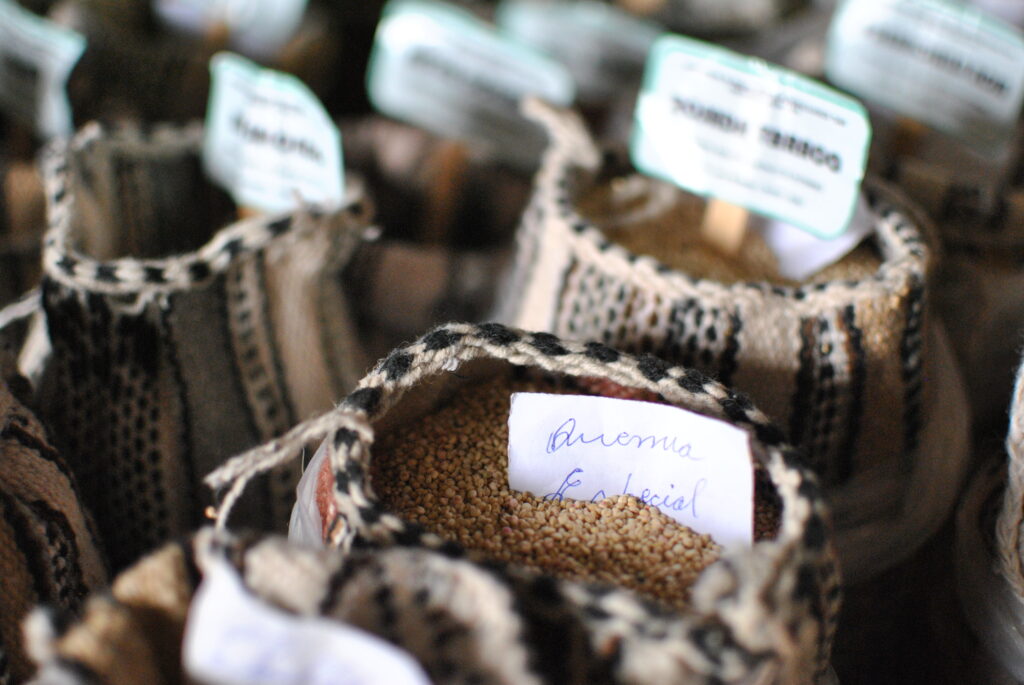
We support farmers’ organisations in structuring their agricultural supply chains, developing services and strengthening their collective capacities. Faced with increased competition arising from the global ‘quinoa boom’, our support for the quinoa and Andean grains sector began in the 2000s, working with the COOPAIN CABANA cooperative to boost the domestic market and strengthen the sector’s resilience through shorter and more stable supply chains. By cutting out the middlemen, farming families can receive fair remuneration and make a living from their farming activities.
Facilitating access to rural finance
We support rural finance institutions that facilitate access for small-scale farmers—who are often excluded from traditional banking services—to loans tailored to their needs, helping them to finance their farming activities sustainably.
Promoting the agroecological transition
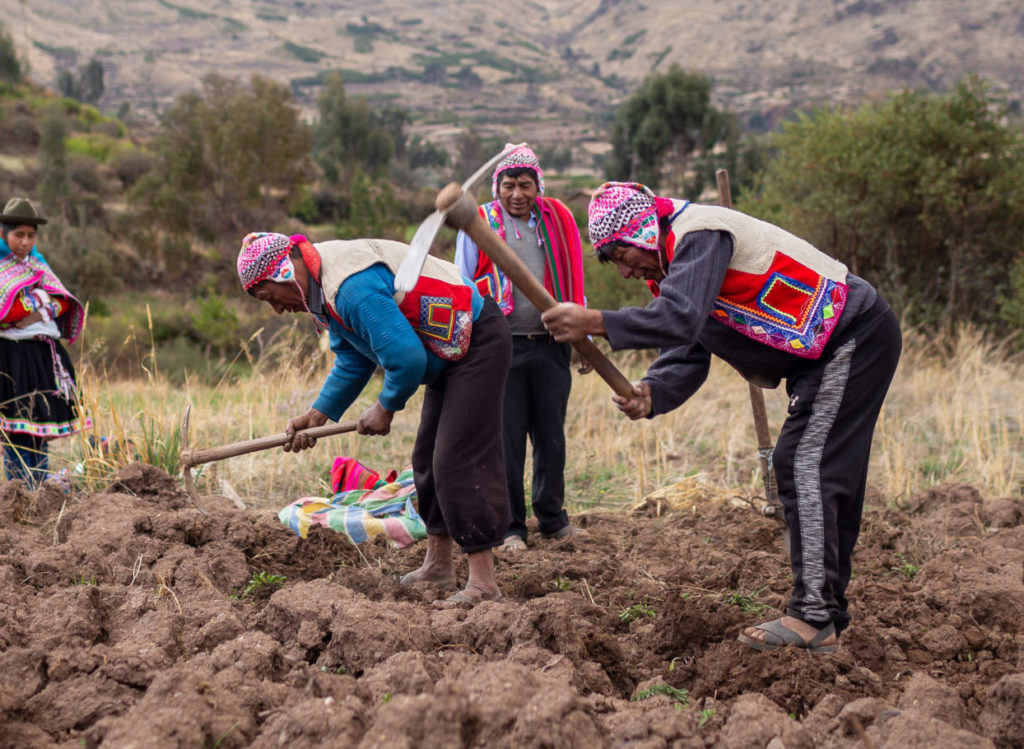
We support sustainable farming practices that respect the soil, water and biodiversity, to strengthen the resilience of family farms and safeguard the health of rural families in the face of climate hazards. At an altitude of over 3,500 metres, we support more than 1,000 alpaca farmers: thanks to agroecological practices such as the production of organic fertiliser, vegetation cover on pastures has increased by 15.8 per cent since 2018. Farmers there also grow and preserve traditional potato varieties, which are better adapted to local conditions and climate change than modern hybrid varieties.
Strengthening national advocacy
We support farmers’ platforms that advocate for family farming and sustainable food systems at a national level. In 2023, our partner, the Peruvian Agroecological Consortium, identified a smuggled pesticide produced in Belgium in Peruvian fields — a discovery that led to our campaign against the export of banned pesticides outside the European Union, culminating in the adoption of a Belgian royal decree putting an end to this practice in November 2023.
Key figures

9
Partners

2
Microfinance institutions
4
Farmers’ organisations

3
Local NGOs

737 922
Beneficiaries
644 K€
Invested
Our partners in Peru
To effectively meet the needs of rural families, Humundi carries out projects alongside 9 local partners: farmers’ organisations, NGOs and rural finance institutions, to build a fairer agricultural model, create economic opportunities in rural areas and restore threatened ecological balances.
| Our partners in Peru | What we do together |
|---|---|
| ARARIWA | Building the capacity of public and civil society actors and supporting producers in the production and marketing of agroecological products. |
| AGROSALUD | Supporting indigenous communities in territorial development and sustainable agricultural diversification. |
| CAAP (Centrale Agro-Andine du Pérou) | Supporting the agroecological transition and collective marketing by five cooperatives of Andean cereal producers. |
| CIDERURAL | Facilitating access to finance and building the capacity of 35 savings and credit cooperatives spread across 20 regions of the country. |
| COOPECAN | To improve the quality of life of small-scale alpaca farmers through textile production and marketing at markets. |
| Consorcio Agroecológico | To raise awareness and advocate for agroecology, alongside civil society. |
| CONVEAGRO | To carry out advocacy work in support of family farming and a sustainable agricultural model that guarantees the country’s food and nutritional security. |
| FOGAL (Fonds de garantie en Amérique latine) | To facilitate access to credit for rural families in the Andean region. |




Your donations and support make a difference
Every day, thousands of Andean and Amazonian farmers are working towards a more resilient form of agriculture, capable of feeding their regions despite the poverty and inequalities affecting rural areas. With your support, they can go further: adopt agroecological practices, access suitable financing, and better organise their supply chains.
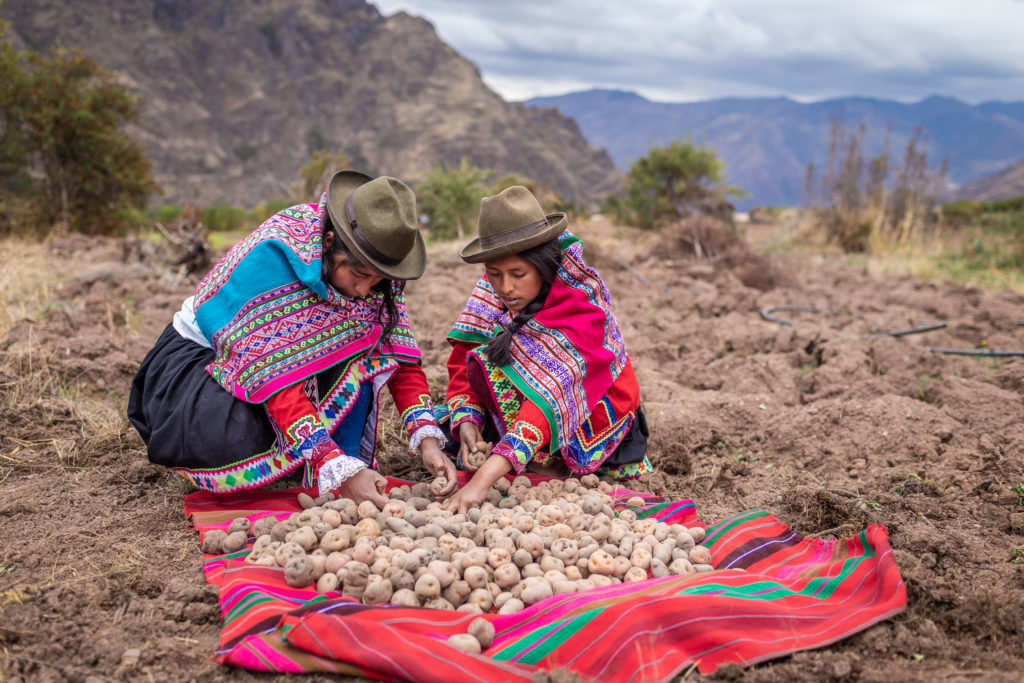

Your donations and support in Peru fund training in agroecology, the distribution of seeds suited to local climatic conditions, and the strengthening of rural cooperatives. Your support also helps to empower women and young people in their farming projects, giving them the means to increase their incomes. Your donation also helps to protect the health of rural communities by reducing their exposure to pesticides.
Every contribution, whether one-off or regular, helps to reduce poverty, promote sustainable development in rural areas and build a fairer future for Peruvian farming communities.
Make a donation today to Peru to provide practical and long-term support to farming communities that are most vulnerable to the climate crisis and food insecurity.
FAQ – Donations and aid in Peru
Read more: PeruWhy does Humundi work in Peru?
Despite its economic growth, Peru continues to be marked by significant social inequalities, particularly in rural areas where rates of poverty, childhood anaemia and food insecurity are especially high. For over 25 years, Humundi has been working to provide sustainable support to farming families and to promote resilient agricultural alternatives.
What are Humundi’s main activities in Peru?
Humundi supports the development of sustainable agricultural value chains, facilitates access to rural finance, promotes the transition to agroecology and strengthens national advocacy for family farming.
How is my donation used in practice?
Your donation funds training in agroecology, the distribution of suitable local seeds, provides access to appropriate loans and supports the farming activities of women and young people in rural areas.
Who does Humundi work with in Peru?
We collaborate with nine partners – farmers’ organisations, NGOs and rural finance institutions – to implement projects tailored to local conditions in the southern Andean and Amazonian regions.
In which other countries is Humundi active?
As well as Ethiopia, Humundi carries out projects in eight other countries across Europe, Africa and Latin America, promoting agriculture that feeds, regenerates and empowers rural communities.
- In Latin America: Bolivia
- In Africa: Burkina Faso, Ethiopia, Mali, Senegal, Uganda, DRC
- In Europe: Belgium
28 February 2025
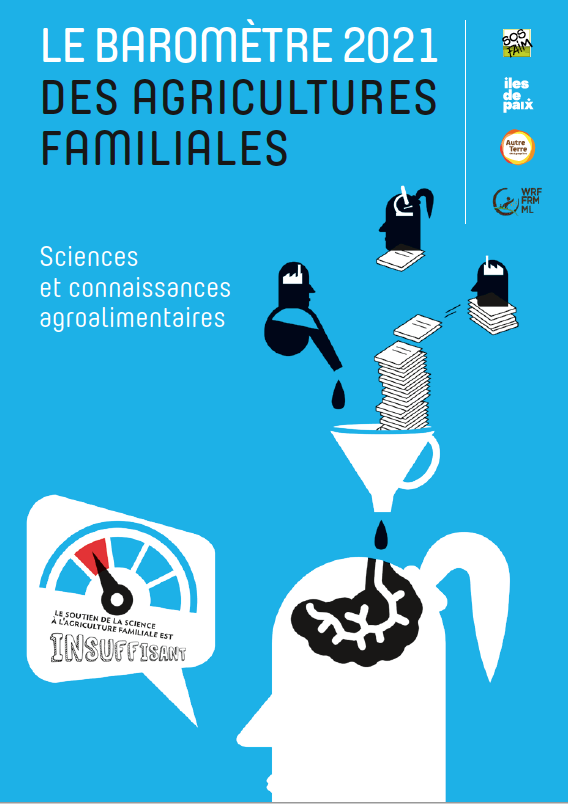
The family farming Barometer 2021
For the past four years, the Family Farming Barometer has been looking at the issues that affect family farming and to which family farming is responding. It investigates the transition to sustainable food systems, which would ensure food security for everyone, now and in the future. For this 2021 edition, the Family Farming Barometer focuses…
28 February 2025
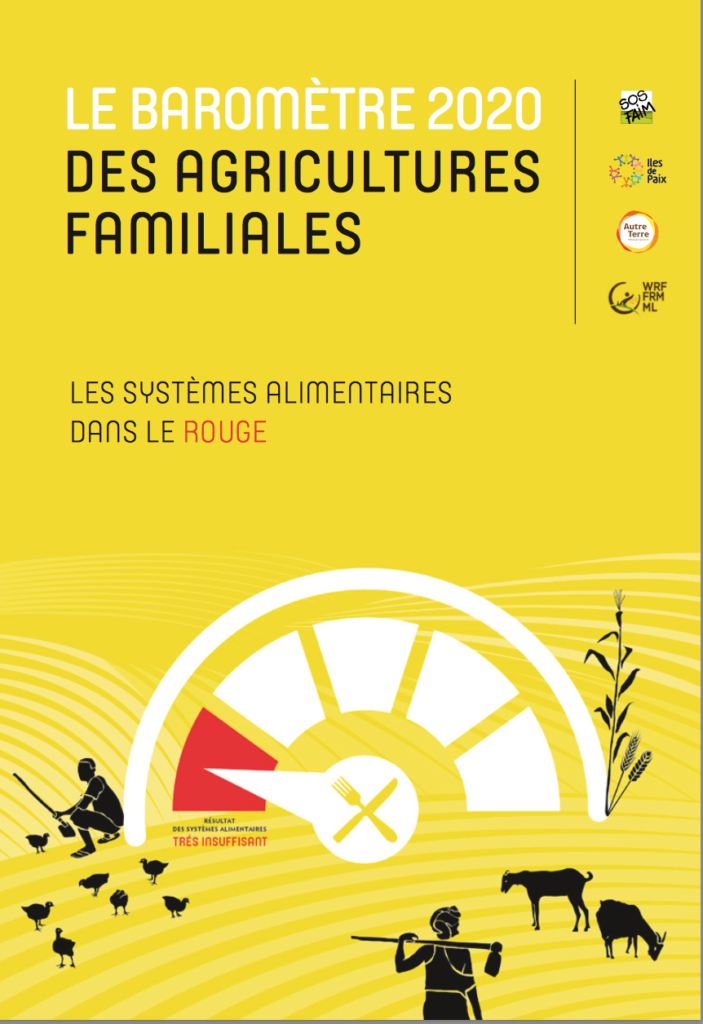
BAROMETER 2020
Understanding food systems to better transform them ! Agriculture? Malnutrition? Today, when we talk about these issues, it’s customary to talk about ‘food systems’. The fact that the United Nations will be holding a summit on food systems next year is proof of this. But what exactly do we mean by this notion? And above […]
28 February 2025
Barometer 2019
Family farming is one of the most widespread forms of agriculture in the world. Far from being a thing of the past, they are adapting and responding to changes in the environment. The Family Farm Barometer analyses the current issues that are shaping and transforming them. This publication assesses how global trends are benefiting or […]
Our countries
of action
We work in nine countries in Europe, Africa and Latin America to promote sustainable food systems. Working closely with local partners, we provide support tailored to each context to generate a positive impact.