
Our work in the DRC aims to strengthen family farming and food security for farming communities. Humundi (formerly SOS Faim) is an organisation that has been working alongside farmers’ organisations, local NGOs and rural finance institutions for over 40 years to support Congolese farming families in achieving greater food self-sufficiency.
Our work in
The context in the Congo
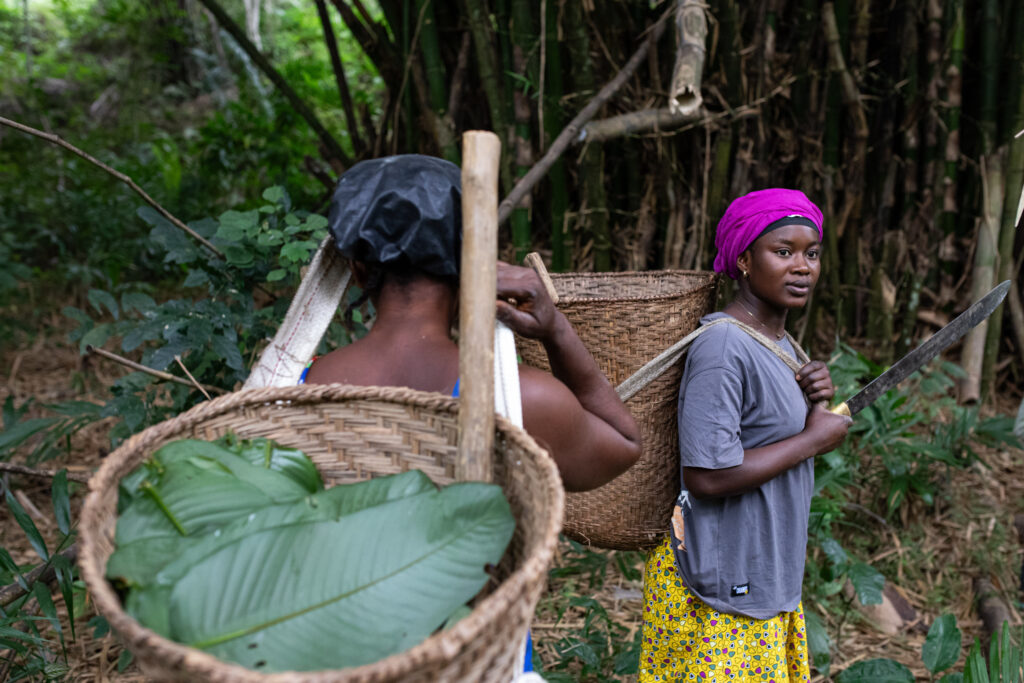
The Democratic Republic of the Congo, one of Africa’s largest countries, is one of the poorest countries in the world, despite its considerable natural resources: rich soils, forests, natural gas and oil. According to the World Bank, around 69 per cent of the population lives below the national poverty line (2024), and the country ranks among the five poorest nations in the world.
This vulnerability is compounded by a major food crisis: according to the latest FPI analysis, 24.8 million people were facing acute food insecurity between September and December 2025, a figure expected to rise to 26.6 million by early 2026. Armed conflicts in the east of the country are exacerbating the situation: according to OCHA, the DRC had more than 5.3 million internally displaced people by the end of 2025.
Although 65 per cent of the population lives in rural areas and is mainly engaged in family-based subsistence farming, national agricultural policy does not regard family farming as a driver of development, and it does not benefit from public or private investment. Instead of increasing public support for the development of local agriculture, the government relies on massive food imports. This scourge particularly affects market gardening: a study conducted by SOS Faim among 126 farmers in the Kinshasa region reveals the widespread use of pesticides banned in Europe, such as Thiodan (endosulfan), due to their low cost and the lack of border controls. Due to a lack of training or protective equipment, 41 per cent of market gardeners report taking no protective measures when spraying, thereby endangering the health of producers, the soil, consumers and the environment. This is a major public health issue, affecting both farmers and consumers.
Our work in the Congo
Since the 1980s, the Humundi association has been promoting more sustainable, equitable and resilient agriculture to meet the needs of rural communities. Our work is concentrated in particular in the provinces of Kongo-Central and Kinshasa, as well as at national level.
Supporting the agroecological transition
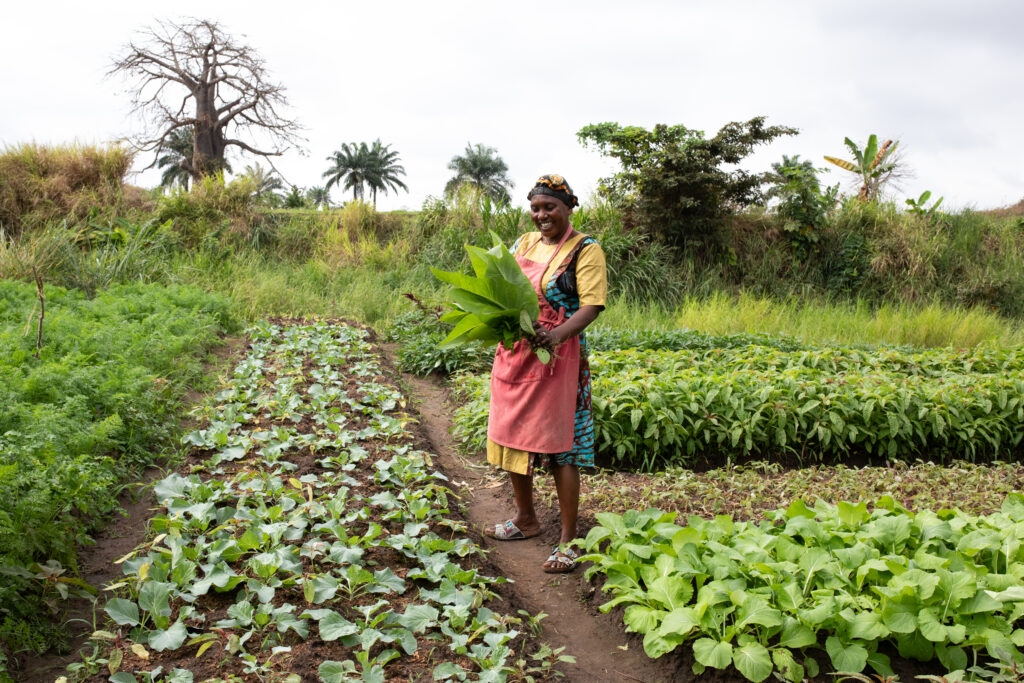
We are supporting the development of the Liziba Agroecology Centre in the province of Kinshasa, which is structured around ten areas of work: training, food production, the manufacture of organic inputs, the processing of agricultural products, support for micro-enterprises, and the demonstration of sustainable practices. Thanks to on-site training, the production of biopesticides and biofertilisers there has reached 1,250 litres per month; these products are intended for market-gardening communities in Kinshasa, helping to protect their health by reducing their exposure to chemical pesticides. The centre also hosts a market-gardening co-operative supported by Humundi, which benefits more than 1,200 market gardeners, 40 per cent of whom are women.
Facilitating access to rural finance
We are working with a microfinance institution to develop financial services tailored to farmers – who are often excluded from traditional banks – such as microloans, in order to facilitate access to the resources needed to develop their businesses.
Supporting farmers to harvest and sell their produce more effectively
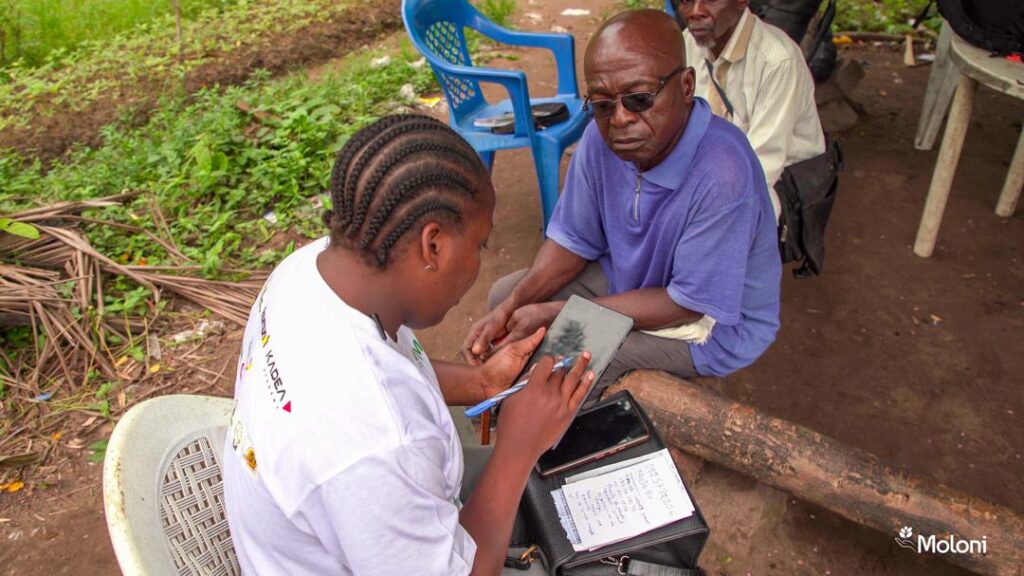
Since 2025, Humundi has been rolling out Moloni, an AgriTech platform that helps Congolese farmers produce more effectively, harvest at the right time and sell at the best price. This project brings together a unique ecosystem of stakeholders: a telecoms operator, a digital academy, an agricultural research institute, the Ministry of Agriculture and Food Security, as well as several Congolese farmers’ organisations, including our partner CONAPAC. By the end of 2025, 6,261 farmers had already registered on the platform, including more than 2,320 women, with the aim of reaching 10,000 users by 2026.
Advancing national advocacy
We are part of the AgriCongo Alliance, a collective advocacy framework that champions a more inclusive agricultural policy at national level, drawing on data and success stories gathered on the ground.
Through this approach, the NGO Humundi helps to build sustainable agricultural value chains, improve producers’ incomes and ensure healthy, locally sourced food for Congolese families. This rural development support aims to create the conditions for a resilient and socially just agricultural sector.
Working alongside farming families
for 40 years

Key figures

7
Partners
2
Farmers’ organisations

1
Microfinance institution

4
Local NGOs

120 022
Beneficiaries
> 485 K€
Invested
Our partners in the Democratic Republic of the Congo
Humundi carries out its projects alongside 7 partners: NGOs, farmers’ organisations and a microfinance institution that strengthen access to resources and the empowerment of rural Congolese communities.
| Our partners in Congo | What we do together |
|---|---|
| APROFEL (Association for the Promotion of Women in Lukula) | Organising rural women into a network and supporting economic activities related to seed production (cassava, maize, cowpea, soya, rice, oil palm, banana, coffee), with a gender-sensitive approach. |
| CENADEP (National Centre for Support to Development and Popular Participation) | Building the capacity of farmers’ organisations through an advisory service and carrying out awareness-raising activities (the LVPC newspaper, the Alimenterre Festival). |
| CDK (Caritas Development Kinshasa) | Organising and supporting the agroecological transition of urban market gardeners in Kinshasa, via an agroecology centre. |
| CONAPAC (National Confederation of Agricultural Producers of Congo) | Organising and defending the interests of Congolese agricultural producers, through advocacy, organisation and the Alimenterre Festival. |
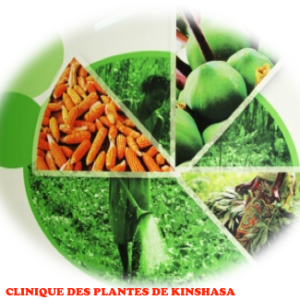
| CPK (Kinshasa Plant Clinic) | To conduct research and support the production of biopesticides and biofertilisers based on indigenous plants. |
| SMG (Guilgal Microfinance Society) | To connect farmers’ organisations with microfinance institutions and develop tailored financial products (micro-loans, blending funds). |



Your donations and support make a difference
Every day in the DRC, thousands of farmers are committed to more sustainable agriculture, capable of feeding their region despite the poverty and food insecurity afflicting the country. With your donations and support, they can go further: adopt agroecological practices, access suitable financing, and better market and organise their supply chains.
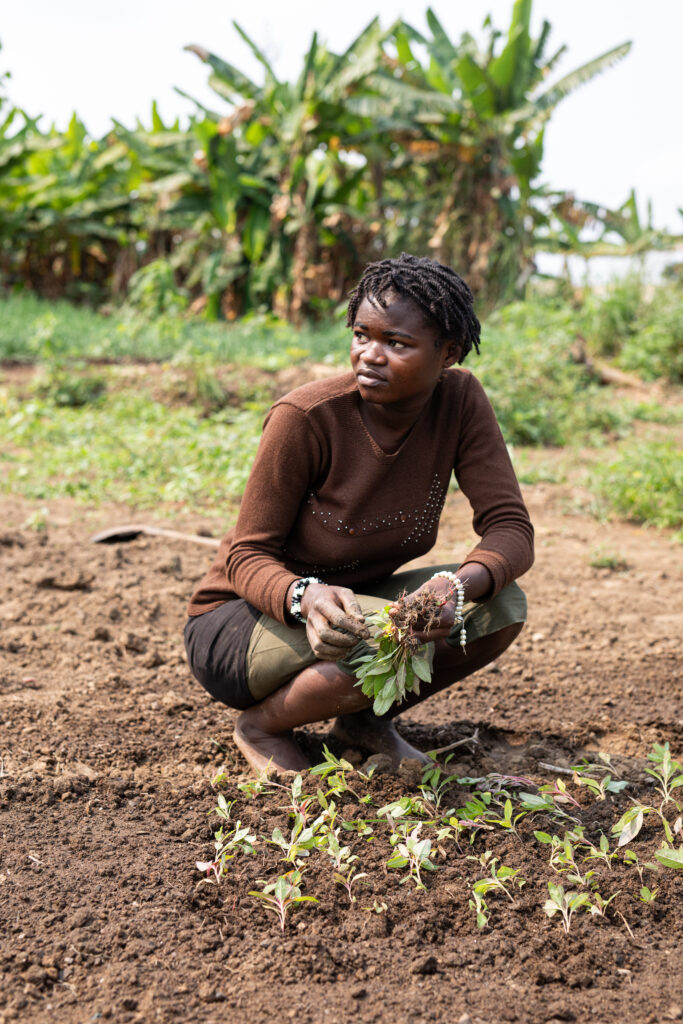

Your donations and support in the Democratic Republic of the Congo fund agroecological training, the distribution of local and sustainable seeds, and the development of digital tools for rural communities. Your support also helps to meet the economic needs of rural communities and provides direct assistance to families facing food insecurity.
Every donation, whether one-off or regular, helps in the fight against rural poverty and social injustice, and contributes to building a more resilient future for Congolese farming families.
Make a donation today to the Congo to provide practical and long-term support to rural communities most vulnerable to the climate crisis and food insecurity.
FAQ – Donations and aid in the Democratic Republic of the Congo
Read more: Democratic Republic of CongoWhy does Humundi work in the DRC?
The DRC is one of the world’s richest countries in terms of natural resources, yet also one of the poorest. The majority of its population lives in rural areas and depends on family farming for their survival. Since the 1980s, Humundi has been working to strengthen this sector, combat rural poverty and support farmers’ organisations towards greater autonomy.
Where does Humundi operate in the DRC?
Our work is concentrated in the province of Kongo-Central and in Kinshasa, but also at national level through the AgriCongo Alliance, a collective advocacy framework for a more inclusive agricultural policy.
What are the objectives of Humundi’s work in the DRC?
Our objectives are to strengthen farmers’ organisations and their capacities, support the transition to agroecology in the face of the widespread use of toxic pesticides, facilitate access to rural finance, and advocate for a more inclusive agricultural policy.
How is my donation used in practice?
Your donation funds training in agroecology, the production of biopesticides, national advocacy, access to rural finance and the development of digital solutions to support Congolese rural communities.
Who does Humundi work with in the DRC?
We collaborate with farmers’ organisations, NGOs and a microfinance institution on projects rooted in the realities on the ground.
In which other countries does Humundi operate?
As well as Ethiopia, Humundi carries out projects in eight other countries across Europe, Africa and Latin America, promoting agriculture that nourishes, regenerates and empowers rural communities.
- In Africa: Burkina Faso, Ethiopia, Mali, Senegal, Uganda
- In Latin America: Peru, Bolivia
- In Europe: Belgium
11 September 2026
Attestations fiscales : mention obligatoire du numéro de registre national pour les dons
Conformément à la nouvelle réglementation du SPF Finances, mise en vigueur au 1er janvier 2024, Humundi est désormais tenue de collecter le numéro national de chaque donateur et donatrices afin d’émettre les attestations fiscales requises ; vous trouverez le texte officiel sur le site du SPF Finances : Attestations…


9 September 2026
Et si votre testament contribuait à construire un monde sans faim ?
À l’occasion de la Journée du Testament, Humundi souhaite rappeler qu’un testament permet non seulement d’organiser la transmission de son patrimoine, mais aussi de faire vivre ses valeurs et ses engagements dans le temps. Un testament peut être l’occasion de transmettre bien plus que des biens : il peut aussi traduire…

21 August 2026
Sécheresse : comment l’agroécologie aide les paysans à s’adapter
Cet été, la chaleur et la sécheresse se sont imposées en Europe : vagues de chaleur à répétition, sols asséchés, incendies jusque dans nos Fagnes, surmortalité. Nos campagnes ne sont pas épargnées : canicules et manque d’eau mettent les prairies, les cultures et les élevages à rude épreuve. En Belgique, les premières…
Our countries
of action
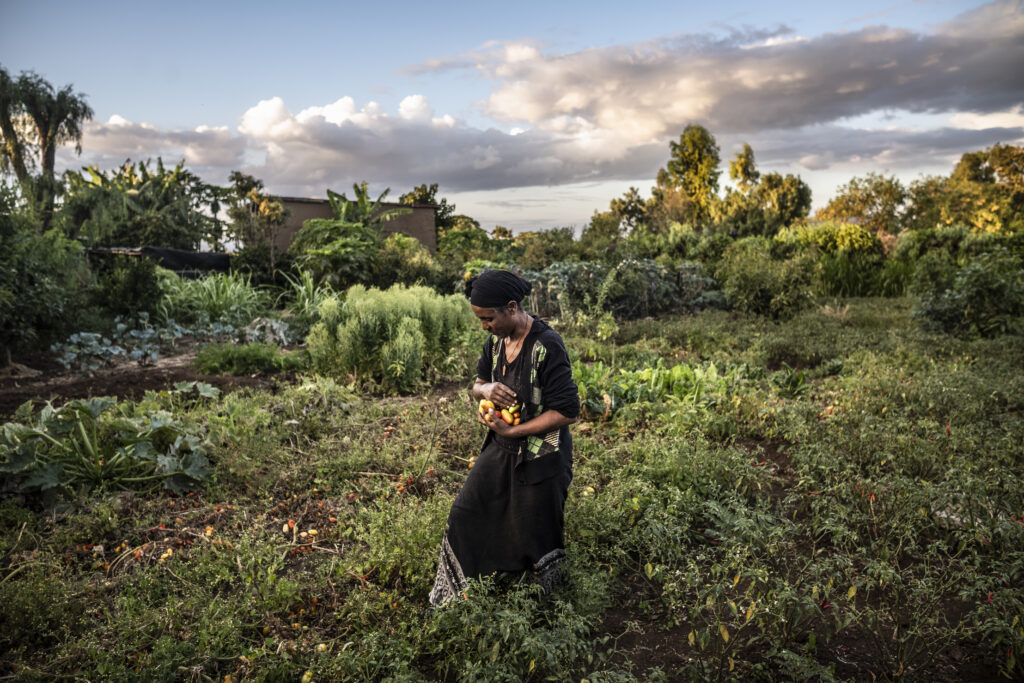
We work in nine countries in Europe, Africa and Latin America to promote sustainable food systems. Working closely with local partners, we provide support tailored to each context to generate a positive impact.
